
Christchurch Folk Music Club
Luthier Exhibition and Concert
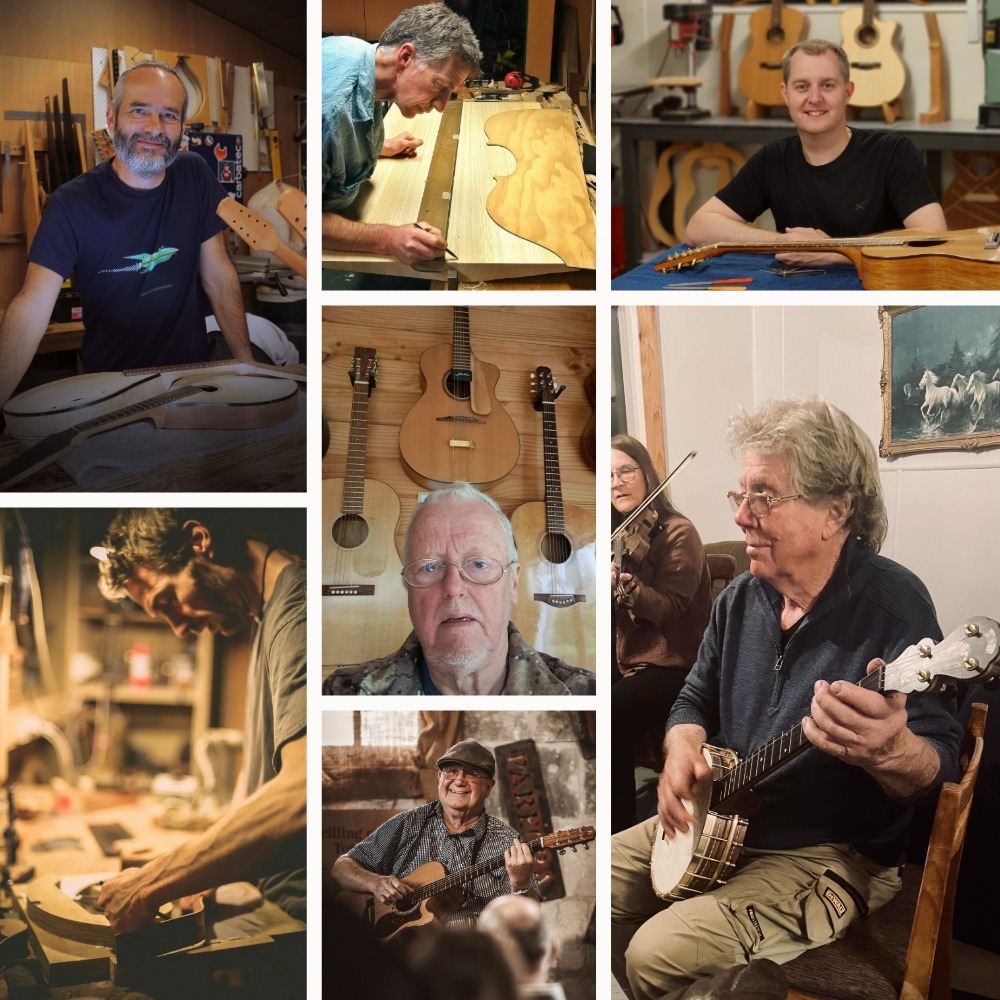
The featured luthiers for this Exhibition are Peter Stephen, Steve Barkman, Graham Wardrop, Patrick Murray, Don Milne, Davy Simpson, and Malcolm Locke.
Exhibition times:
Concert: 7.30 to 10pm
This concert brings together a masterclass of New Zealand’s finest instrument makers, offering a rare glimpse into the intersection of timber, technique, and tone. From the deep resonance of the double bass and the versatile voice of the acoustic guitar to the bright, rhythmic snap of the banjo and mandolin, the evening is as much a tribute to the workshop as it is to the stage.
Peter Stephen – Bass, Guitar, Mandolin, Ukulele, Bespoke
Officially, Peter has been a luthier for 35 years, with a workshop first in Waltham and, from 2000, in Lyttelton. Unofficially, he has been making and repairing instruments since his early teenage years. In the 1990s, he spent a year working in Germany, mostly at Lakewood Guitars, with a brief stay at Hanika Guitars.
Peter has made a range of instrument types, including double basses, bass guitars, acoustic guitars (ranging from small parlours to large archtops), mandolins and ukuleles. He has also made bespoke instruments, for example a ten-string bass guitar.
His website www.peterstephen.co.nz indicates the range of instruments he can make.
Peter has two excellent employees – Scout White and Lola Bosser Toca. Scout has worked with Peter for over five years, plays the mandolin and is well known in the Christchurch folk scene. Scout has a lead role in repairing instruments and assists Peter in new builds. Lola is visiting from Spain (where her father is a well-established luthier) and has assisted Peter with new builds for the past few months. Lola plays the double bass/bass.
Peter prefers to make instruments ‘on-spec’ and sell those to interested people rather than make an instrument to a commission. In the workshop, he now has underway several 000 guitars, two double basses, several ukuleles and mandolins and one cittern, all of which will eventually find the right home.
Peter is also a double bass player and plays in Allan Hawes’ band, Finished Business. With apologies to the folk club, he says he is a jazz player and admirer first and foremost. However, he is also a Beatles fan, which may redeem him in the eyes of folk players.
Peter is grateful to the Christchurch Folk Club for arranging this exhibition and he is always happy to assist folk players with repairs or interest in his new builds.
Steve Barkman – Guitar, Mandolin, Bespoke
From helping out with his father’s carpentry and boatbuilding endeavours in the 1950s and 60s, and a lifelong interest in music, also shared with his Father, Steve has, in an attempt to compensate for a lack of playing skill, fiddled about with his own and friends’ instruments.
A friend who was a serviceman during the 70s and 80s for the large keyboard/organs that were popular in farmhouses at the time, Lowery, Farfisa, Yamaha and the like, would return to Dunedin with various stringed instruments for repair, and pass them on to Steve. This led to work from local music stores as well, and thereafter it became a serious ‘hobby’, which led to the construction of his first guitar in 1989.
Redundancy from a local engineering supply house in 1998 then led to the hobby becoming a full-time pursuit. Since then, Steve has completed around 250 instruments of various types, many of which were ‘custom’ orders, overwhelmingly belonging to the folk community, and regularly seen and played at folk clubs and festivals around NZ.
Graham Wardrop – Guitar
Guitar building has been secondary to his playing of the instrument, but it requires an equal passion and skill in order to produce a fine instrument. Building or playing, one is always striving for, but never achieving, perfection. Graham thought that building guitars would get easier as he got older, but it doesn’t – at least not for him. Every aspect of the process is a challenge both mentally and physically.
In the end, Graham says that there is nothing that equals playing music on instruments you have built. One can’t get much closer to expressing one’s unique spirit than playing original music on an instrument you have built yourself.
Graham acknowledges the friendship and generosity of Peter Stephen. He has learned a huge amount from him. He has always been there to explain and discuss all aspects of luthiery and he has helped resolve many of the mistakes Graham believes he has made over the years.
Patrick Murray – Guitar
Patrick Murray is a local guitar builder blending traditional hand-crafted luthiery with modern design and fabrication techniques. Each instrument is built by hand using time-honoured methods, carefully shaped, carved, and voiced for tone, balance, and feel, while modern CAD design and 3D-printed jigs and templates ensure accuracy, consistency, and repeatability where it matters most.
Patrick works with a wide range of native and exotic hardwoods, alongside carefully selected locally sourced reclaimed timbers, giving many instruments a unique story as well as a distinctive sound. Wood choice, grain orientation, and resonance are considered at every stage of the build.
Every guitar is painstakingly finished in nitrocellulose lacquer, applied in multiple thin coats and hand-buffed to a deep, high-gloss showroom shine. The result is a finely crafted instrument that respects tradition while embracing modern innovation, built to be played, admired, and enjoyed for decades.
Don Milne – Banjo
Some time around 1965, Don bought an old banjo that needed extensive repairs. His friend Arthur Toms told him about an “old chap” living in Plimmerton who made banjos, so he took it to him to get it repaired. This was Rawe Hawkins, who did indeed make banjos and played in the classical fingerstyle style.
Rawe was an inspiration, a man who could make anything it seemed, including his own band saw built from scratch from his own casting patterns. He agreed to make the new dowel stick, etc., but said Don would have to help by making the tailpiece; so for a few Saturday mornings, Don would head out to his place and work away with the drill and file, making the brass tailpiece while Rawe did the other repairs.
Rawe made many fine banjos, including the resonator banjo that Clive Collins has been playing since those days.
This interaction and friendship showed Don that a good banjo could be made in a small workshop with just a lathe, bandsaw and some good hand tools. All his working life as a carpenter and metal machinist, Don has sought out the tools best suited to banjo making in his dotage.
Don started making banjos around 2010, with a rim and tone ring for a beautiful neck that Tom Warren had made in the style of a Gibson Mastertone bluegrass banjo. He dove in at the deep end for sure, and with a little help from his friends, Steve Barkman included, it turned out quite well. It was rather heavy, so he was interested in making something lighter without losing the quality of sound. Whilst travelling, he got to play a banjo with a tone ring invented by Henry Dobson in 1880. It sounded great and was much lighter than the Gibson pattern, being spun brass rather than a bronze casting, so this is what he now makes, having the rings spun on patterns he machined for the purpose.
Don’s banjos are made from some imported woods such as American Hard Maple, Walnut and Ebony, plus some of our native Puriri from Great Barrier Island. He makes the hardware that is practical, such as the tension band, the bracket tube, co-ordinator rods and tone rings of various designs; the hooks, nuts and shoes are imported.
Decorative art has been a feature of banjo making since banjos started to be produced in factories. A friend of Don’s designed the inlay pattern showing a Tui sitting amongst the flax flowers; his daughter Molly designed the Tui and Clematis vine inlay. Recently, he has been using some MOP for restoration work using more traditional patterns as well, cutting the Mother of Pearl inserts and the pockets they fit in using an old pantographic engraver.
The rims are of the steam-bent and laminated type or the block segmented pattern, the latter making good use of wood that would otherwise be wasted when the neck profile is sawn from the neck blank. The neck is book-matched on the centreline with up to 5 veneers; more can be added under the fingerboard, all of which add great stability as well as looking attractive. The fingerboard can be fretted, flush fretted or fretless.
For the afternoon display, Don will be bringing some of the components that he makes for his banjos and revealing how they are made, as well as some of the building processes. In the evening, he will play a variety of his banjos, and we will hear how the various designs and timbers affect the voice of the banjo.
Davy Simpson – Mandolin
Davy came to instrument building reasonably late, although he has played guitar since he was twelve. After studying painting in Aberdeen, he went to work in fine art publishing, which eventually took me to New Zealand and Lyttelton. Here, he found it easier to shake off his preconceptions about what he could and should do, and started making ‘things’. Simple furniture, basic blacksmithing – he just wanted to make the tools he used and the objects in his life. A love of film photography led to a photo series on makers, and his first introduction to instrument building through local maker Peter Stephen. Around this time, he was getting into folk and trad music and fell in love with the mandolin. It seemed like a bright idea to make one…
From his base in Lyttelton, he works with local builders and arborists to source and repurpose timbers that have a story – from salvaged rimu and kauri, to one-off pieces of red beech. He definitely does not class himself as a luthier yet – but he makes nice things with strings for nice people.
Malcolm Locke – Mandolin
Malcolm is a long-time woodworker and a relative newcomer to luthiery. His focus is on producing simple mandolins with natural finishes that enhance the sound and beauty of the selected timber. He works from a small workshop in New Brighton, Christchurch, principally using hand tools. You can see and hear some of his work at https://www.youtube.com/@MalcolmLocke and contact him at malclocke@gmail.com
Doors open 7pm. Performance starts at 7.30pm,
VENUE: Irish Society Hall, 29 Domain Terrace, Spreydon The hall is situated up the long driveway, directly next to Domain Park, and there is plenty of well-lit off-street parking..
How do I get tickets to concerts?
In advance: Book your tickets online. Select the concert you wish to attend and click on the link to book your ticket.
On the day: Purchase tickets at the venue from 7:15pm on the day of the concert if not sold out prior.
PLEASE BRING CASH For: Tea, coffee, biscuits and cake available during the break and the club raffle. Bar facilities for cold refreshments throughout the night, Eftpos available for purchases only, no cash-out facility.
Folk Club and Irish Society members please remember to bring your membership card for licensing purposes. Non-members sign in at the bar if making purchases.
Renaissance
3 May 2026
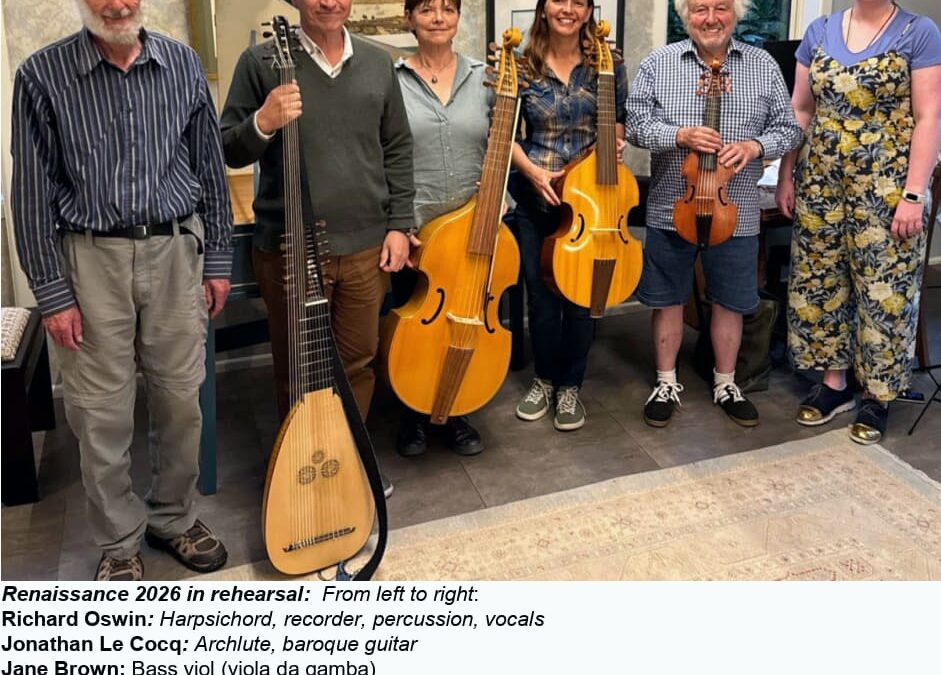
Christchurch based early music group “Renaissance” will present a programme entitled Entente Cordialle: Melancholy and Mirth: Early Music from England and France.
The Groomsmen
19 April 2026
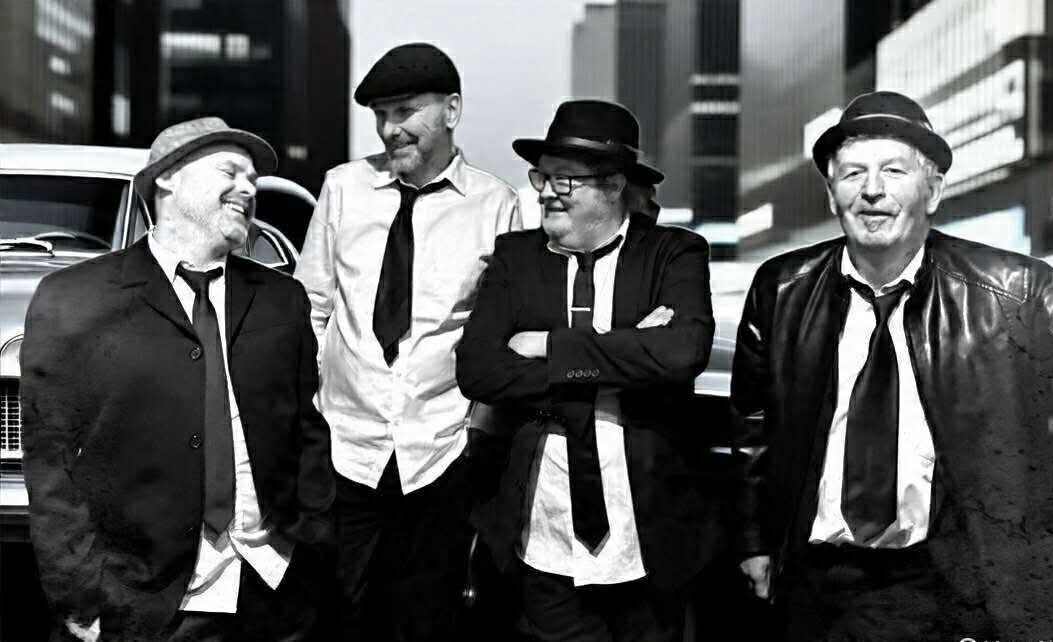
Collectively joining forces to form ‘The Groomsmen’ these boys are looking to
take the bull by the horns and deliver the goods at every show.
Moroney
10 May 2026
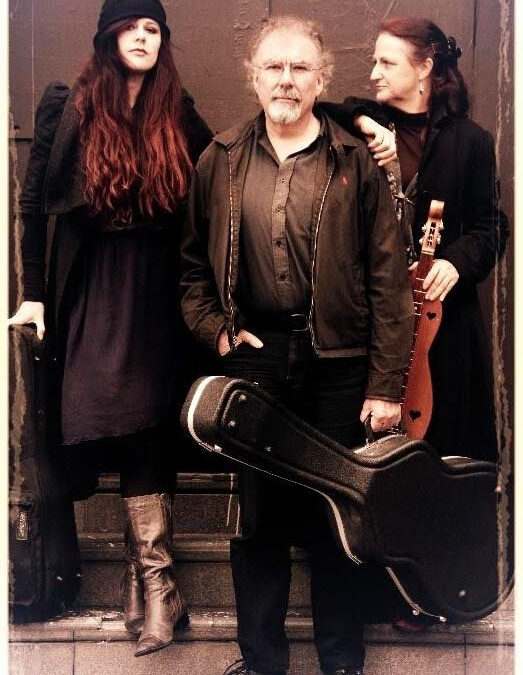
Mike, Bernadette and Siobhan have been playing music in some form or other, all their lives and nearly all of that on the folk scene. All three are vocalists with a that gift for harmony that seems innate in musical families.
Slaughtered Like Foxes
17 May 2026
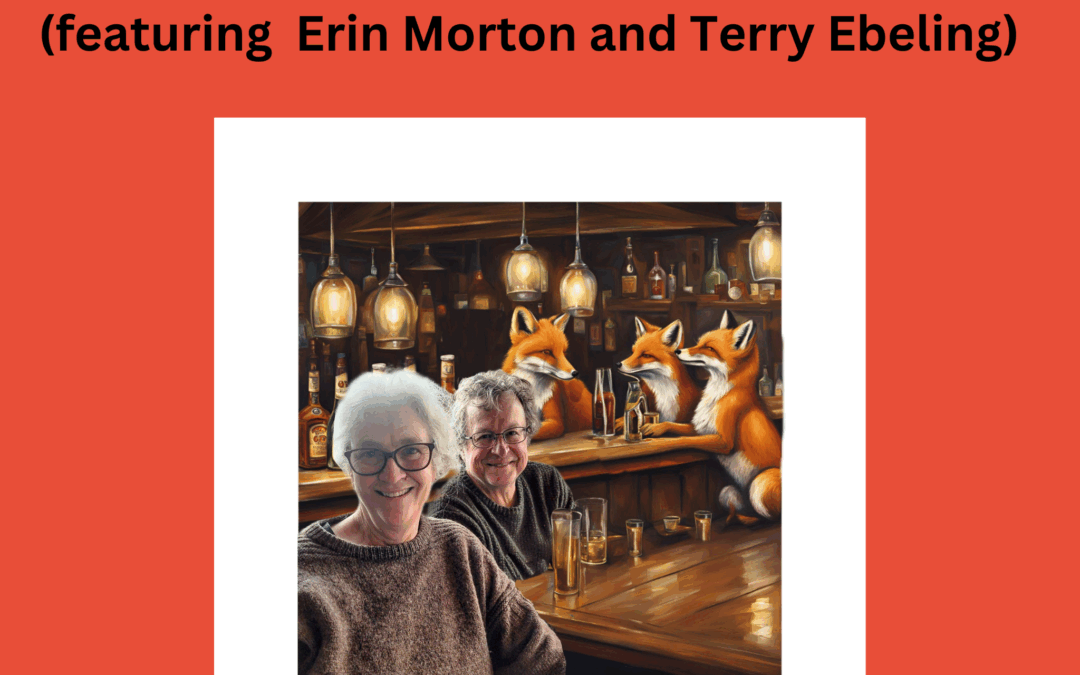
Terry and Erin are both established Dunedin musicians reflecting our hearts, town and people.
They are friendly and engage with their audiences. They will draw a mature crowd who are into Dunedin’s Delgirl and Whirling Eddys, as well as being into acoustic NZ roots music, folk and Americana Blues/roots/rock.
You, Me, Everybody
28 June 2026
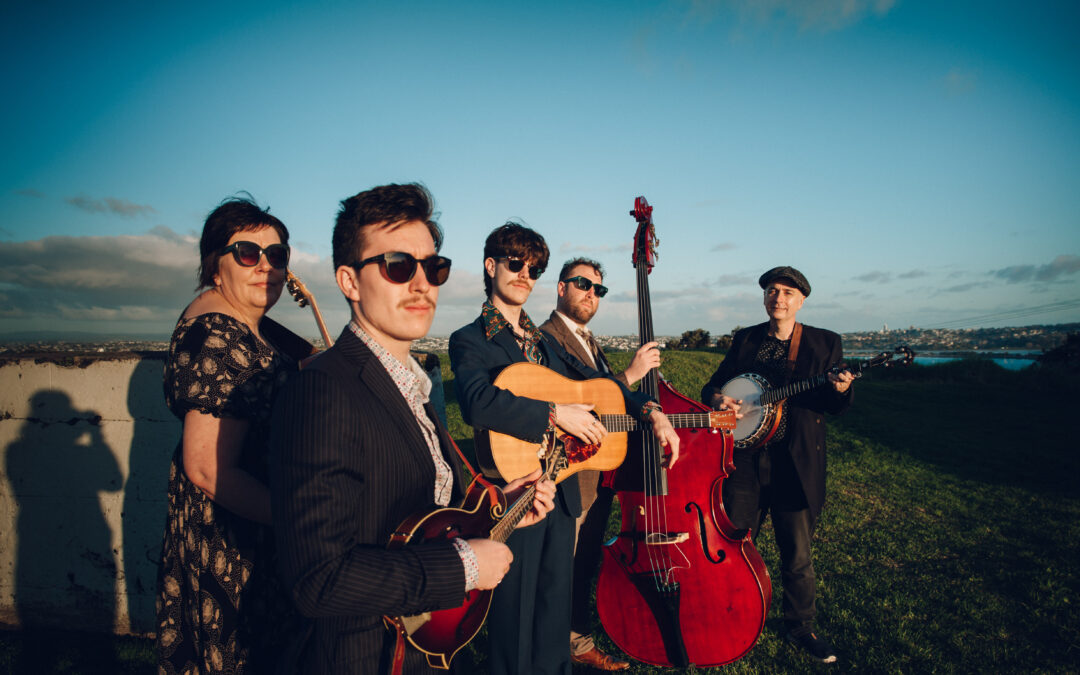
You, Me, Everybody hit the road in 2026 for a national tour celebrating Midnight, their new album inspired by the fleeting moment where one day ends and the next begins.
Celtic Caim – Pauline Vallance (Scotland) and Heather Innes
8 November 2026
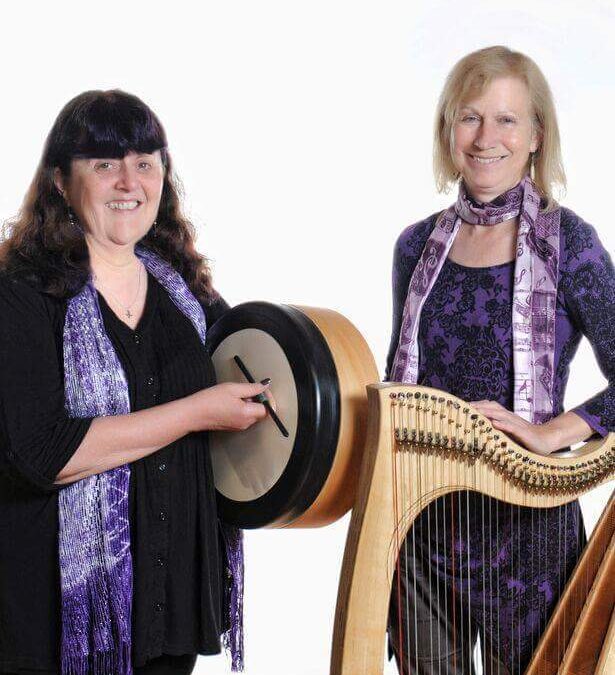
Celtic Caim concerts have been described as “hauntingly beautiful harmony singing,” a capella and accompanied by clasarch, flute or bodhrán. An eclectic mix of Celtic songs, songs written by various songwriters, including Pauline & Heather, plus jigs or reels on flute and bodhrán to get your feet tapping!